
text analysis
Read texts & improve data analysis with AI
In addition to our Konfuzio IDP tool, which is aimed at major customers, we have also developed the May 2025 published a new, more cost-effective tool.

We have been offering Konfuzio IDP for major customers since 2018.

You can test our cheaper Quick Extract immediately.
AI-supported text analysis: opportunities, applications and developments
In a world flooded with information, the ability to process and analyze text efficiently is becoming increasingly important. Whether companies are analyzing customer feedback, researchers are evaluating large amounts of data or individuals want to better understand complex texts, text analysis plays a central role. However, as the volume of data increases, so do the challenges. This is where artificial intelligence (AI) comes into play. It not only automates text analysis, but also takes this process to a whole new level. In this article, you will learn how AI analyzes texts, what possibilities it offers and what ethical issues are involved.
1. basic concepts
Text analysis involves the structured evaluation of text content. The aim is to recognize patterns, extract information or uncover correlations. Artificial intelligence adds a new dimension to this process: it uses natural language processing (NLP) to understand texts automatically, analyze contextual content and deliver targeted results. In contrast to traditional methods, AI is not rule-based, but learns from large amounts of data and adapts dynamically.
2. areas of application
Company: Companies use AI to analyze thousands of customer reviews, identify trends and optimize their marketing strategies. AI also helps to identify conspicuous text patterns in documents or transactions in the area of fraud detection.
Education: AI tools such as analysis platforms help pupils and students to better understand literary texts or scientific articles.
Research: In literature reviews, AI facilitates the selection of relevant content and enables a more efficient understanding of research results.
Public sector: AI has great potential for the automated analysis of legal texts, regulations and administrative documents.
Private benefit: People who do not want to read long or complex texts in full use AI tools to obtain summaries or simple explanations.
3. how AI-supported text analysis works
AI-supported text analysis is based on NLP (Natural Language Processing). This technology translates natural language into machine-readable data structures. The process usually involves the following steps:
- Data preparation: Texts are converted into a readable format and checked for duplicates or irrelevant content.
- Model Training: The AI is trained to recognize patterns such as keywords, tonality or sentence structures.
- Interpretation and results: AI provides data-based insights, presents summaries or creates semantic analyses.
Well-known tools in this area are OpenAI, Google Bard and specialized programs such as IBM Watson.
4 Practical advantages of AI text analysis
The advantages are obvious. AI saves a considerable amount of time and delivers structured results where chaos might otherwise reign. It increases the accuracy of analyses and can handle volumes of text that would be almost impossible for humans to process. Thanks to accessible applications, AI analysis democratizes knowledge and makes it usable for companies and individuals alike.
5 Challenges and ethical aspects
Nevertheless, even the most advanced technologies have their limits. Currently, AI is not flawless when it comes to interpreting contexts, and it is occasionally characterized by distortions in the training data (bias). For example, an AI that has only been trained with biased data can deliver biased analyses. In addition, the issue of data protection poses a significant challenge - high security standards are required, especially for sensitive documents. Finally, the so-called black box character of many AI models raises questions: Decision-making often remains opaque and difficult to understand.
6. future prospects
The future of AI-supported text analysis is promising. Multimodal approaches that combine texts with other data formats could make the results even more precise and comprehensive. In addition, the technology is expected to become even simpler and more user-friendly so that it can be made accessible to a broader target group.
New developments and future prospects
The development of AI-supported text analysis is in a constant state of flux. One of the upcoming innovations focuses on the Use of AI to analyze documentsThis means that legal, academic and business texts can be processed even more effectively. In addition, the combination of long texts with Book analyses through AI expand the range of applications, especially in scientific research and higher education.
Also in the area of semantic interpretation the use of AI promises progress. Advanced tools will be able to contextualize information in real time. This capability will be used in the analysis of documents with literary resources considerably. In the field of education in particular, it will be possible not only to capture content, but also to analyze the intentions and linguistic subtleties of historical authors.
In order to facilitate access to these technologies, new Apps for analyzing texts that are more intuitive and user-friendly. With these applications, even users with no prior technical knowledge can perform detailed and customized analyses. This underlines the goal of democratizing AI and making its power accessible to every user, promoting inclusion and continuous learning.
Conclusion
The use of AI tools for text analysis is fundamentally changing how we understand, interpret and use texts. Whether it is Complex documents or literary works, these technologies offer not only convenience, but also precision. But what do we do with the extra time and knowledge we gain? The real challenge lies in using these capabilities responsibly and ethically.
Artificial intelligence does not replace human thinking or creativity. Rather, it is an amplifier that enables deeper insights and tackles problems in innovative ways. However, it is crucial that its application is in line with ethics, transparency and inclusion.
Automation with scope for development.
100%
DSGVO conformity
With Konfuzio free up resources & make data-based business decisions.

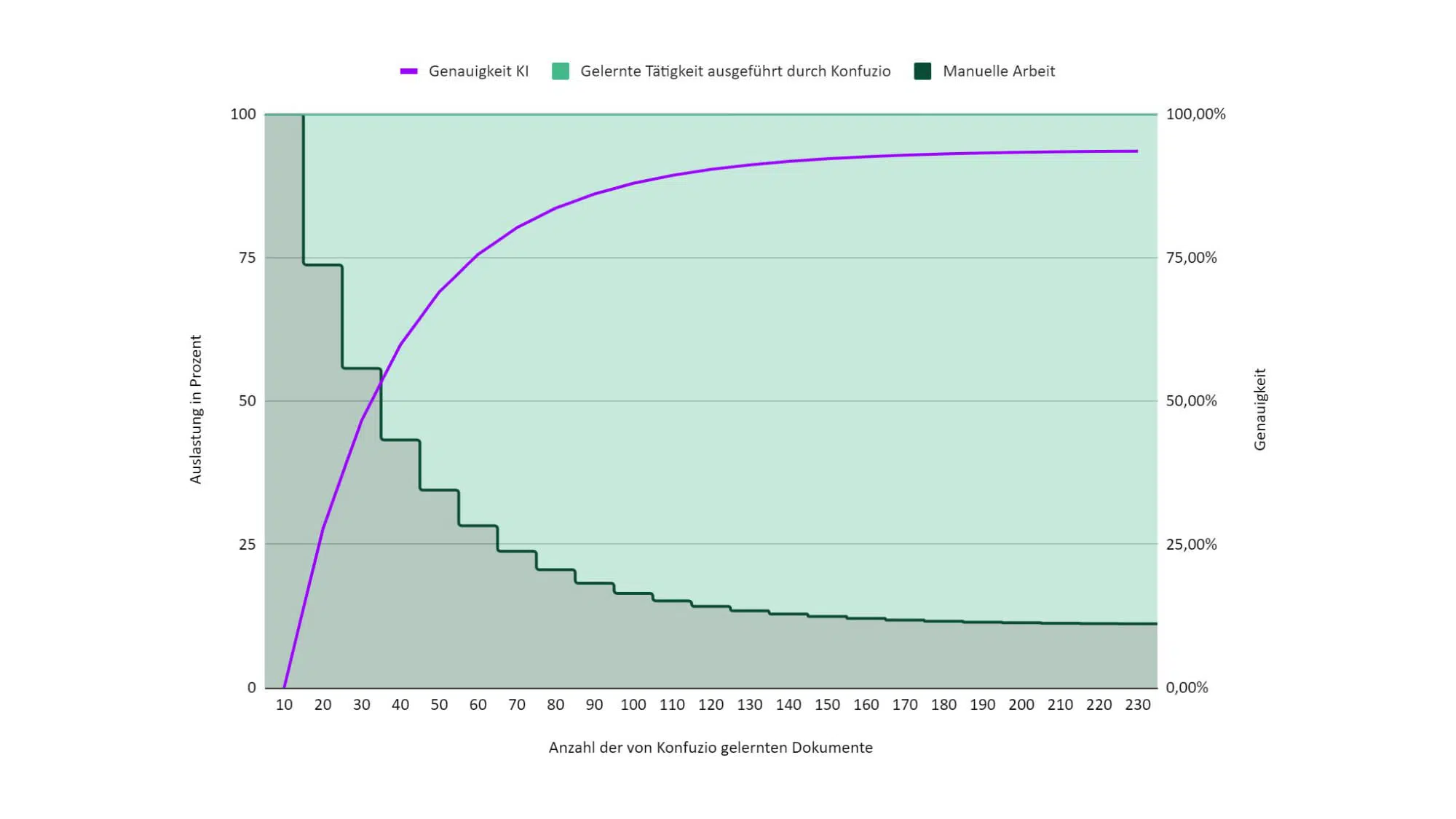
Exact results with only 5 AI training documents
100+ language support
Flexible export & API integration
Human-in-the-loop approach
Without programming effort
How it works
5 documents for AI training.
You only need a handful of documents of an identical type to train the AI. You have full control over every step of the training process.
Create pilot project
Together with our experts, you create a customized project to match your requirements and test the performance of our platform. Only 5 documents of the same type are required.

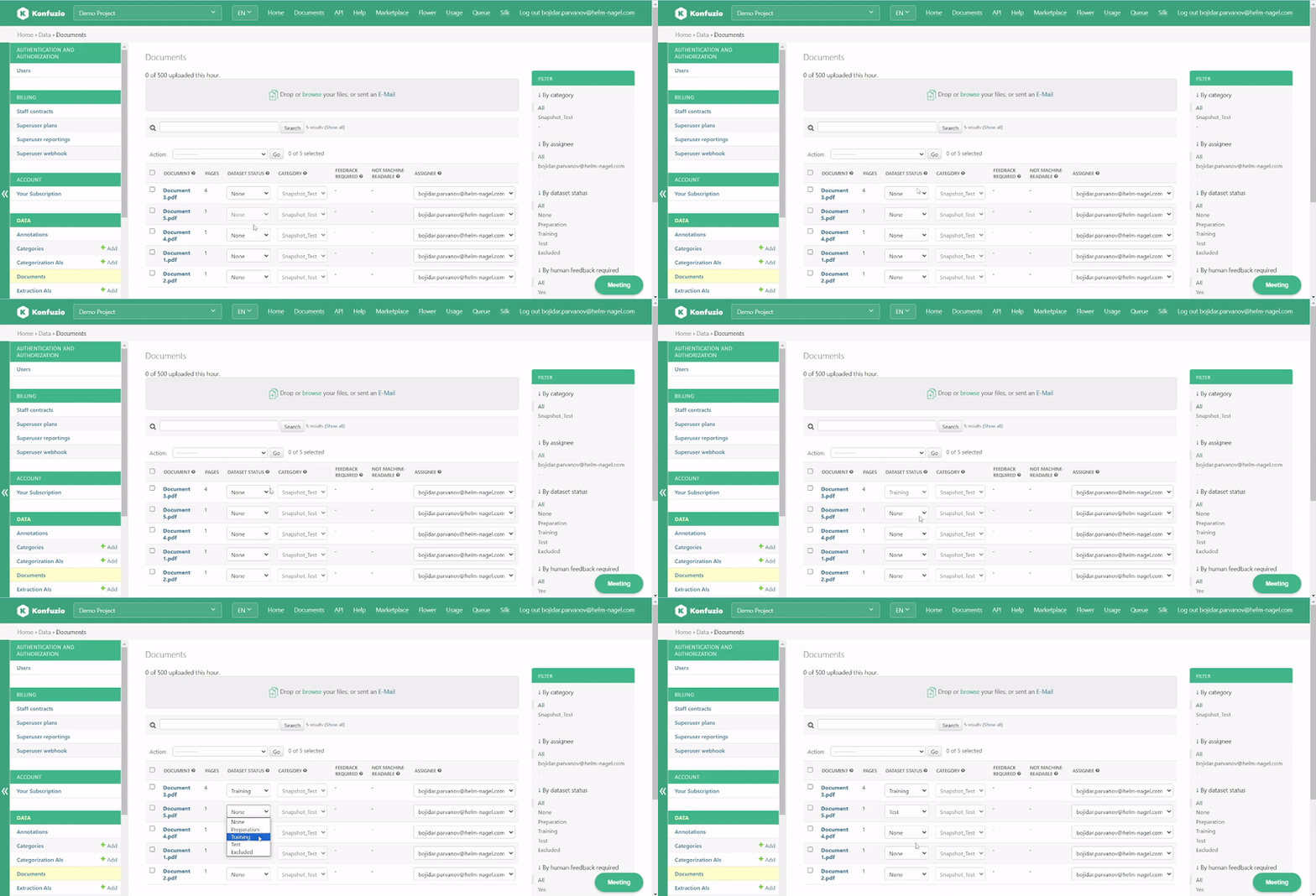
Train AI
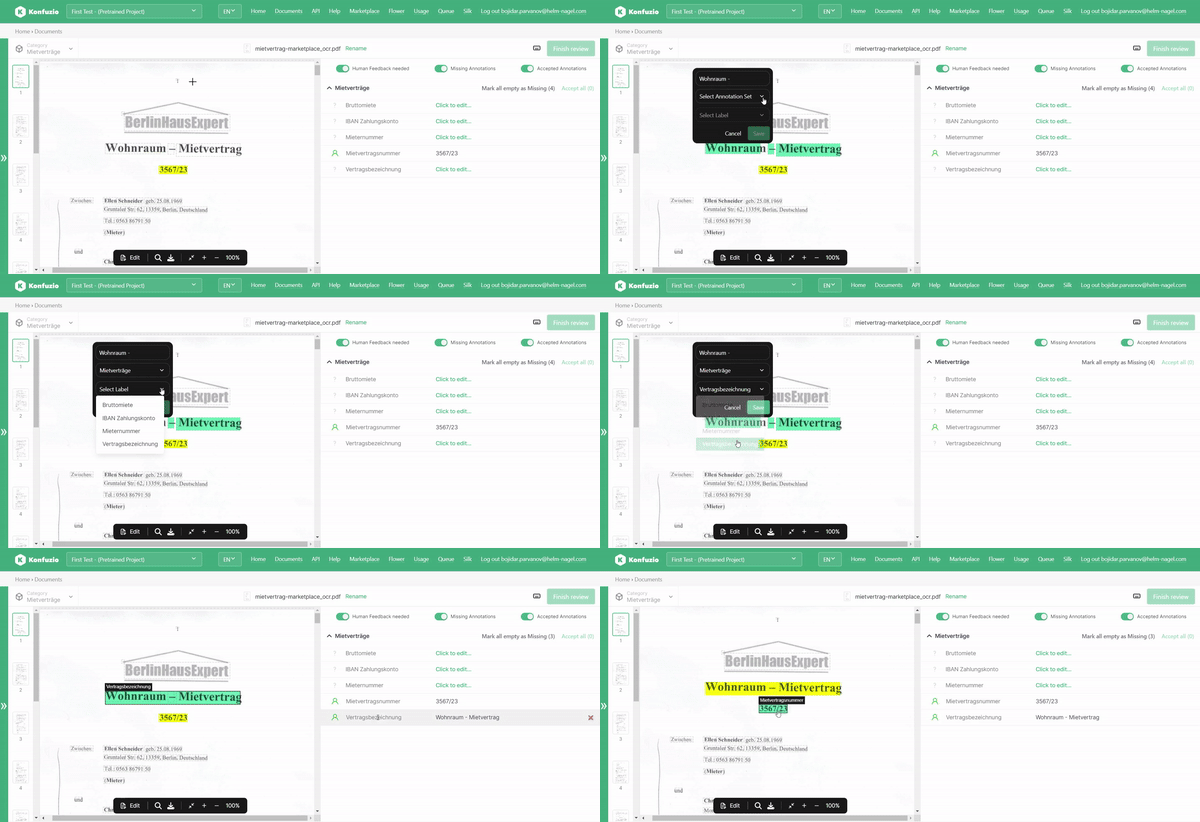
With our user-friendly SmartView function, you manually mark your training data records to train the AI. The AI is tested fully automatically after each training session.
Give feedback
You continuously monitor the AI's capabilities via your browser and adjust them as required with your feedback. This allows you to achieve results with up to 99 % accuracy.

FAQ
Frequently Asked Questions
01.
How does Konfuzio help to improve data quality?
Manual data entry is prone to errors - typos, transposed numbers or omitted information are common in the hectic working day. Konfuzio uses AI to avoid these errors and extract data automatically. The results are more consistent and accurate, which increases the quality of your analyses and business processes.
02.
What is human-in-the-loop and how does human feedback improve results?
Human-in-the-loop means that people can provide feedback during processing to further improve the AI. With Konfuzio, for example, you can check analyzed data and make corrections. This feedback flows into the further development of the AI and ensures that the results of your AI text analysis become more and more accurate over time.
03.
How can I integrate AI into my existing systems?
Konfuzio offers a REST API (an interface for integrating applications) that allows you to seamlessly integrate the results of the text analysis into systems such as ERP, CRM or document management solutions (DMS). This allows you to use the data directly where you need it. Learn more about Konfuzio's integrations & API here.
04.
How exactly does text analysis with Konfuzio work?
After uploading your documents to the Konfuzio platform, the AI recognizes and marks the text passages previously defined as relevant and extracts them automatically. The AI continuously improves based on your instructions and feedback. You can export the results of your text analysis flexibly. Download the extracted data from your Konfuzio project bundled as a CSV file or use our API for seamless integration into your existing systems.
05.
Can I use Konfuzio without prior knowledge?
Yes, the platform is designed to be user-friendly. With just 5 documents of one type, you can train your AI and achieve immediate results. Thanks to the ease of use and SmartView function, no special technical expertise is required. You will also receive support on request through intensive training from our experts, detailed documentation with tutorials and ongoing technical support. Support in case of queries.
06.
Can I also analyze texts in my company with Konfuzio?
Text analysis with Konfuzio is suitable for any company that regularly processes documents - regardless of the industry or document type. Whether it's invoices, contracts, delivery bills, balance sheets or other documents, the platform adapts flexibly to your requirements and ensures accurate results - even complex content such as contract clauses or paragraphs are analyzed precisely.
07.
What are the costs of use?
The cost of Konfuzio depends on your individual requirements, such as the number of documents to be processed and the desired functions. We offer flexible pricing models that are tailored to your company and will be happy to provide you with a customized quote. Offer on request.
 EN
 DE
 ES
 FR