
- Traditional security models are reaching their limits in the face of AI-supported attacks
- Humans remain a key risk factor despite modern technology
- Password security and identity management need to be rethought
- Distributed teams and cloud workflows require flexible, centralized security solutions
- AI changes cyber defense from reactive to learning systems
Traditional security models are often based on static rules, fixed checkpoints and a clear distinction between internal and external. But modern threats use adaptive tactics, automated attacks and targeted social engineering methods that easily bypass these old structures.
At the same time, the number of networked systems, distributed teams and cloud-based workflows. Every additional interface opens up potential risks that are almost impossible to manage without intelligent protection mechanisms.
The shift towards AI-supported cyber defense
Artificial intelligence has become a key tool for keeping pace with the increasing complexity of digital threats. Unlike rigid filter systems, AI recognizes unusual patterns, evaluates deviations in real time and learns from every interaction.
For companies, this means a paradigm shift. Security is no longer just understood as a reaction to attacks, but as a continuous learning process. Systems that adapt dynamically can identify risks before they even manifest themselves.
The human factor as a constant weak point
Despite state-of-the-art technology, human behavior often remains crucial to a company's security. Misdirected clicks, incorrectly shared data or insecure passwords regularly lead to security incidents. Added to this is the trend towards remote working, where private devices and changing networks pose additional risks. Companies that invest in modern security solutions must therefore always address the human factor: clear guidelines, regular training and tools that support employees in their day-to-day work instead of overwhelming them.
Why password security needs to be thought of differently today
Passwords are still the first line of defense in almost every digital system. However, the requirements have become more complex. Where one strong password used to be enough, today dozens of access data are created per person, distributed across platforms, tools and apps.
Without professional management, this inevitably leads to reuse, insecure notes or the sharing of passwords via unprotected channels. Companies therefore need solutions that combine security with user-friendliness and at the same time enable centralized control.
The role of secure access management in the age of AI
With the spread of AI-based attack tools, the need to precisely regulate access to protected systems is increasing. Modern password and identity managers provide a robust basis for this:
- They encrypt sensitive information at the highest level.
- They enable role-based approvals and clear responsibilities.
- They help teams to share access securely without losing track of everything.
- They create transparency by logging who accessed what and when.
In combination with AI-supported security architectures, this creates an ecosystem that minimizes attack surfaces and improves the workflow at the same time.
Distributed teams need new security standards
In many companies today, teams work across national borders, use hybrid companies and regularly switch between devices. This makes access management a strategic challenge.
The days when IT departments could manage every application and every access manually are over. Instead, we need centralized platforms that scale flexibly, offer automated security checks and allow employees to use them intuitively, regardless of their location or technical background.
Why password security needs to be rethought
In modern working environments, employees often manage dozens or even hundreds of digital accesses. Without structured support, this inevitably leads to insecure notes, reused passwords or non-transparent sharing of access data. Modern password strategies combine strong encryption, user-friendly operation, central administration and clearly defined access rights to increase digital security in the long term.
Modern password and identity managers form the basis for resilient security architectures. They encrypt sensitive data end-to-end, enable role-based access approvals, secure the sharing of passwords within teams and log all access in a traceable manner. In combination with AI-supported security solutions, the attack surface is significantly reduced without slowing down the workflow.
Overview of modern password managers
In the context of digital security, companies are increasingly using specialized password and identity managers. These tools help to securely manage access data, define roles and rights and reduce the workload of teams. The following solutions are frequently discussed in practice:
Example of modern security infrastructure
Structured access management is a central component of modern IT security strategies. Solutions such as the Password manager for companies from NordPass Business, are used in this context to centrally manage passwords, clearly regulate access and reduce sources of human error - without unnecessarily complicating day-to-day work.
Read our Information on data protection and information security.
NordPass Business

By loading the video, you accept YouTube's privacy policy.
Read more
NorthPass enables companies to centrally manage passwords and secure notes. Role-based access rights, logging of access and intuitive operation help teams to share passwords securely and keep an overview at the same time. This reduces sources of human error and efficiently increases digital security.
Bitwarden
By loading the video, you accept YouTube's privacy policy.
Read more
Bitwarden is an open source solution (see GitHub), which works across all platforms and also offers a free basic version. It impresses with its transparency and control over data, is suitable for teams that value open standards and is often recommended in community discussions.
Proton Pass
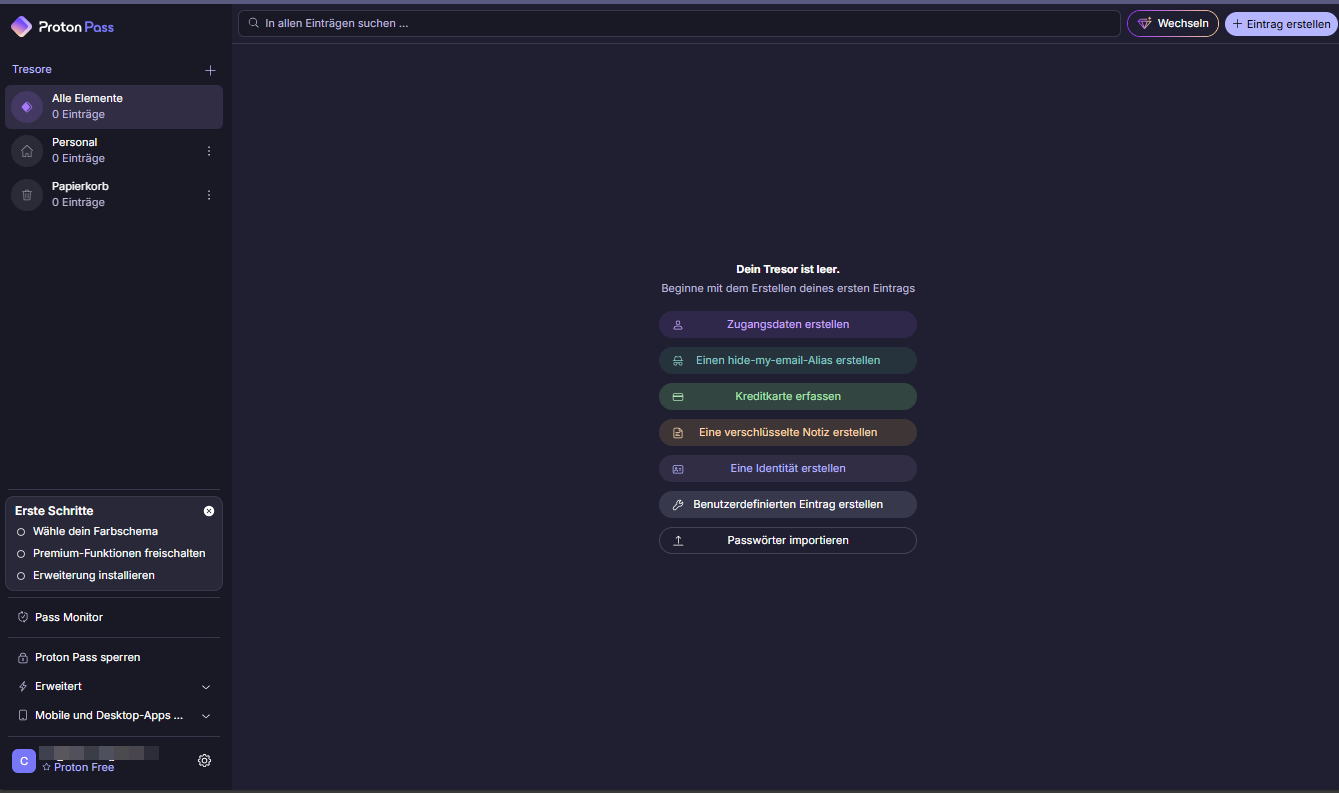
Proton Pass focuses on data protection and end-to-end encryption. In addition to managing passwords, the solution enables the secure use of passkeys and the simple sharing of access within teams. Data protection-conscious companies in particular appreciate the combination of security and user-friendliness.
1Password
By loading the video, you accept YouTube's privacy policy.
Read more
1Password offers a user-friendly interface and extensive security features that benefit both teams and families. With clearly structured access rights and simple operation, the solution is suitable for companies looking for an intuitive platform with professional support.
KeePass / KeePassXC
By loading the video, you accept YouTube's privacy policy.
Read more
KeePass and KeePassXC store passwords locally and offer maximum control over data. The open source tools require more administrative effort, but are used by organizations that want to avoid cloud solutions and value complete self-control.
Dashlane / Keeper
By loading the video, you accept YouTube's privacy policy.
Read more
Dashlane and Keeper are commercial solutions with extended functions such as dark web monitoring or integrated VPNs. They are suitable for teams with special security requirements where additional protective measures are required in addition to password management.
Do you use a password manager that is not yet mentioned in this article? Please contact us and we will add it to our list.
Brief analysis for companies
By loading the video, you accept YouTube's privacy policy.
Read more
- Transparency & control: Bitwarden and KeePass score points with their open source approach and local storage.
- Privacy & Security: Proton Pass and NordPass offer encrypted, centrally managed systems.
- Usability: 1Password and NordPass offer intuitive interfaces that quickly engage employees.
- Additional functions: Dashlane and Keeper often include tools for monitoring and VPN, which can be interesting depending on the company's needs.
AI, automation and the future of corporate security
As artificial intelligence advances, the security environment will continue to change. Attacks will become more precise, more automated and more difficult to predict. At the same time, intelligent systems open up new opportunities to identify risks at an early stage and create clear internal structures. Companies that start to think holistically about their security architecture now will create advantages for the coming years. They not only strengthen their defense mechanisms, but also their resilience and their ability to adapt flexibly to new technological conditions.
Why the correct handling of identities remains crucial
Identities are the key to almost all digital resources. Their protection is becoming increasingly important in the face of automated attacks. A future-proof security strategy is therefore based on clear processes, transparent access management and continuous adaptation to new threats. In this way, digital security remains manageable even in an increasingly AI-driven world.

 EN
EN  DE
DE  ES
ES  FR
FR